


 Categories
Download Catalogue

How to Select the Right Hydraulic Pump for Your Excavator
Picking the perfect hydraulic pump isn’t just about matching numbers. It’s about knowing how the insides work, what they’re good at, and how they fit your excavator’s job. Whether you’re tackling tough trench digging or juggling tasks in tight city spaces, the pump you choose—piston or gear—changes how quick, tough, and easy to maintain your machine is. This guide dives into the tech differences. It also shows how Hantang’s products meet global rules.
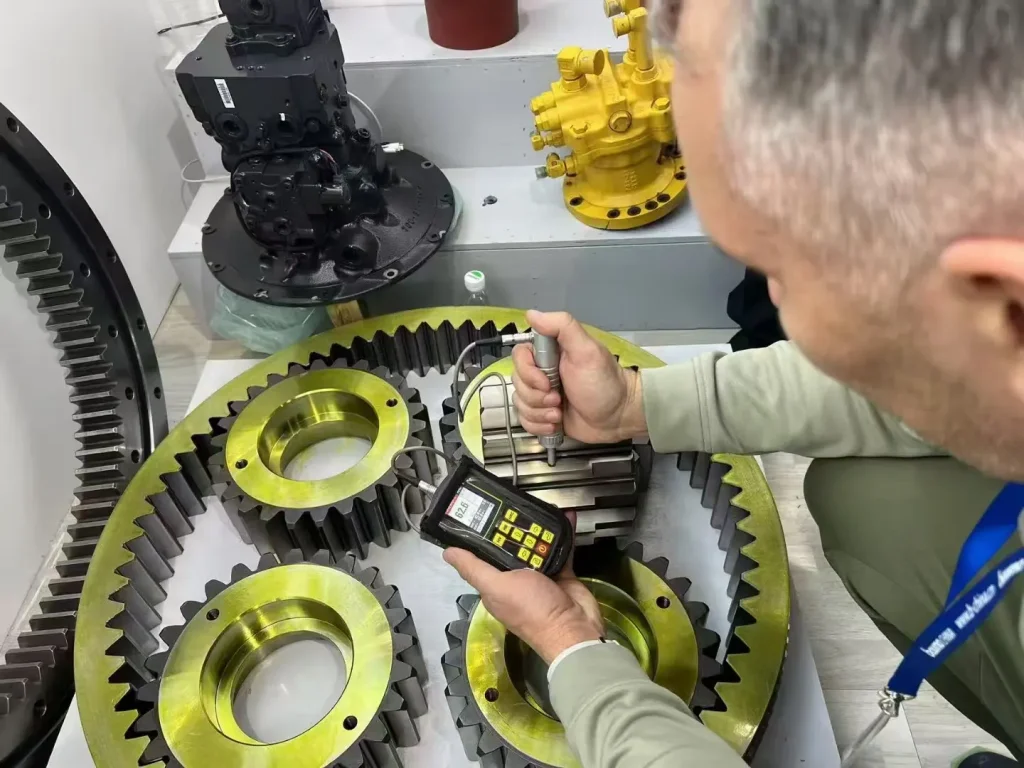
How Do Piston and Gear Pumps Differ in Internal Mechanism?
Before we get to how they perform, let’s look at what makes piston and gear pumps tick inside.
Axial and Radial Piston Motion in Piston Pumps
Piston pumps use pistons that slide back and forth in cylinders to create pressure. They come in two main types: axial and radial.
A piston hydraulic pump is a hydraulic pump that uses the piston to move up and down in the pump body to generate pressure. When the piston drops, it squeezes the liquid out. When it rises, it pulls liquid in. This steady back-and-forth delivers strong pressure and smooth flow. It’s awesome for heavy-duty jobs.
Rotating Gear Engagement in Gear Pumps
Gear pumps, though, work with spinning gears to move fluid.
A gear hydraulic pump is a hydraulic pump that uses gears to rotate in the pump body to generate pressure. As the gears turn, they push liquid out. When they stop, liquid gets sucked in. This setup is simple and compact. But it usually handles lower pressures than piston pumps.
Flow Regulation Through Mechanical Design
Piston pumps often have adjustable parts like swash plates or bent-axis designs. You can tweak the swash plate angle to change displacement smoothly. This gives you control over flow based on the job. Gear pumps? They’re usually fixed. Their flow depends on how fast the gears spin.
What Are the Performance Characteristics of Each Pump Type?
Now that we know how they work inside, let’s check how they hold up in real-world tasks.
Pressure Range and Flow Rate Capabilities
Piston pumps are champs at high pressure. Hydraulic pumps can produce high-pressure liquid because components such as pistons inside the hydraulic pump can convert mechanical energy into hydraulic energy. Gear pumps can’t push as hard. Still, they’re solid for many standard digging tasks.
Efficiency Under Variable Load Conditions
Piston pumps with adjustable displacement handle changing loads better. For systems that need to adjust flow, variable pumps are a better choice. They tweak flow based on demand, boosting efficiency. Gear pumps struggle with varying loads. Their fixed design makes them less flexible.
Durability and Wear Resistance
Both pumps last if you maintain them right. But piston pumps often outlast gears in tough jobs. Under harsh working conditions, the durability and impact resistance of the pump are particularly important and directly affect the service life of the equipment.
How Does Each Pump Type Affect Excavator Operation?
Your pump choice shapes how your excavator runs on the job.
Precision Control in Heavy-Duty Applications
Piston pumps offer top-notch control. Their variable displacement makes them precise. Composite control (DFR/DFLR) combines multi-parameter coordinated control of pressure, flow and power, suitable for dynamic load change scenarios (such as injection molding machines).
Responsiveness in Multi-Function Tasks
Excavators doing multiple moves—like swinging and lifting together—benefit from pistons’ quick response. Short control response time makes them ideal for complex operations requiring quick adjustments.
Compatibility with Excavator Hydraulic Systems
Gear pumps fit simple setups where saving money matters more than pinpoint control. But modern excavators need advanced controls. Piston systems handle those better.
What Are the Maintenance Requirements for Each Pump Type?
Maintenance isn’t just about downtime. It’s about keeping your machine reliable for years.
Inspection Frequency and Common Wear Points
For both pumps, check seals, oil cleanliness, and shaft alignment regularly. Check the shaft seal (FKM material) and joint seal every 2000 hours. The cycle needs to be shortened in high temperature environment.
Gear pumps may need replacing sooner because their gear teeth wear out. Piston pumps need checks for swash plate or plunger damage. But they often last longer between big fixes if you run them right.
Replacement Part Availability and Cost
Gear pumps usually have cheaper parts. Their design is simpler. But brands like Rexroth make piston units with modular designs. These make repairs easier. Block design supports easier part replacement without full disassembly.
Downtime and Service Complexity
Gear pumps are fast to swap out if they break. That’s great for rental fleets or far-off sites. Piston systems take longer to fix. But they pay off with longer life after repairs.
How Do Piston and Gear Pumps Compare in Terms of Application Suitability?
Let’s pair each pump with common digging jobs.
Use in High-Pressure Excavation Environments
Piston pumps rule here. The hydraulic piston pump has the characteristics of high pressure, large flow and good stability. Think mining shovels or rock breakers where raw power meets exact control.
Adaptability to Different Excavator Models
Gear pumps shine when fixing up older or budget machines. Their fit is straightforward. But makers now lean toward variable-displacement piston units. These adapt to many tasks.
Integration with OEM Specifications
We offer assemblies like:
- PVC80RC13Pump Assembly Nabtesco – Built for high-performance systems demanding reliable axial-piston operation.
- 708-3S-11220Pump Assembly KOMATSU – A robust gear-style unit suited for general-purpose excavation tasks.
These assemblies show Hantang’s fit with OEM specs. They also keep aftermarket options open across regions.
How Do Hantang’s Products Reflect These Differences?
Hantang focuses on matching job needs with world-class brand fit through smart assemblies:
PVC80RC13 Pump Assembly Nabtesco for High-Performance Systems
This model is made for advanced excavators. It needs precise control under changing loads. It’s a classic axial-piston design used by Nabtesco systems worldwide.
708-3S-11220 Pump Assembly KOMATSU for Robust Gear Pump Applications
This is a direct-fit replacement or OEM specs solution for Komatsu machines with gear-based hydraulics. It’s perfect where reliability meets low cost without losing quality.
Alignment with Global Excavator Brands and Standards
Hantang’s stock covers many global standards. These include SAE flanges, ISO cleanliness levels (NAS 9), and torque specs per VDI 2230. These are key for fitting into branded machine systems. The oil port flange complies with SAE standards, and the installation torque must be checked according to VDI 2230.
What Factors Should Be Considered When Selecting a Pump Type?
It’s not just about specs. It’s about matching real-world needs with tech ability.
Excavator Size and Hydraulic Load Requirements
Bigger machines need piston setups. They have a higher displacement range (35CC–500CC). Smaller models run better on compact gear units. 35CC–500CC can be used in multi-link connection.
Project-Specific Operational Demands
Doing city utility work? Gear-driven is simple. Digging in remote mines? Piston-powered handles tough loads better. Self-priming performance can quickly absorb oil when starting.
Manufacturer Support and Product Documentation from Hantang
Hantang gives detailed guides for each product line. This includes installation tips: It is recommended to install the drive shaft horizontally ensure that oil drain pressure of each pump is ≤0.5 bar. This ensures smooth fit for new builds or replacements.
FAQs
Q1: Can I upgrade from a gear pump to a piston pump on my existing excavator?
A: Yes—but you must check if your machine’s control system works with it. Variable-displacement pistons often need electronic controls older models might not have.
Q2: What type of oil should I use with Hantang’s hydraulic pumps?
A: It is recommended to use ISO VG 46 anti-wear hydraulic oil. This is especially true for heavy jobs or extreme temperatures.
Q3: How often should I check seals on my hydraulic system?
A: Check shaft seal (FKM material) every 2000 hours. Do it sooner if you’re in high-heat environments.


